


A Systematic Review of Flame Retardants (Brominated and Organophosphate) and Human Cancer

- Department of Biomedical Sciences, Faculty of Medicine and Health Sciences, Universiti Putra Malaysia, 43400 Serdang, Selangor, Malaysia
- Liupanshui City Women and Child’s Health Hospital of Guizhou Province, Liupanshui, China
- Office of Postgraduate Studies, UCSI University, 56000 Kuala Lumpur, Malaysia
- Department of Obstetrics and Gynaecology, Faculty of Medicine and Health Sciences, Universiti Putra Malaysia, 43400 Serdang, Selangor, Malaysia
- Department of Chemistry and Biochemistry, College of Medicine, University of Fallujah, Fallujah, Iraq
- Department of Community Health, Faculty of Medicine and Health Sciences, Universiti Putra Malaysia, 43400 Serdang, Selangor, Malaysia
- Handan First Hospital, Congtai District, Handan City, Hebei Province, China
Abstract
Background: Brominated flame retardants (BFRs) are persistent and ubiquitous environmental contaminants with recognized endocrine-disrupting potential, raising concern regarding their possible contribution to human carcinogenesis. This systematic review, conducted in accordance with the PRISMA guidelines, evaluated the association between BFR exposure and human cancer risk, examined the underlying mechanistic pathways, and identified existing research gaps.
Methods: A comprehensive literature search of PubMed, Scopus, and EBSCO Discovery Service was performed for studies published between January 2015 and May 2025.
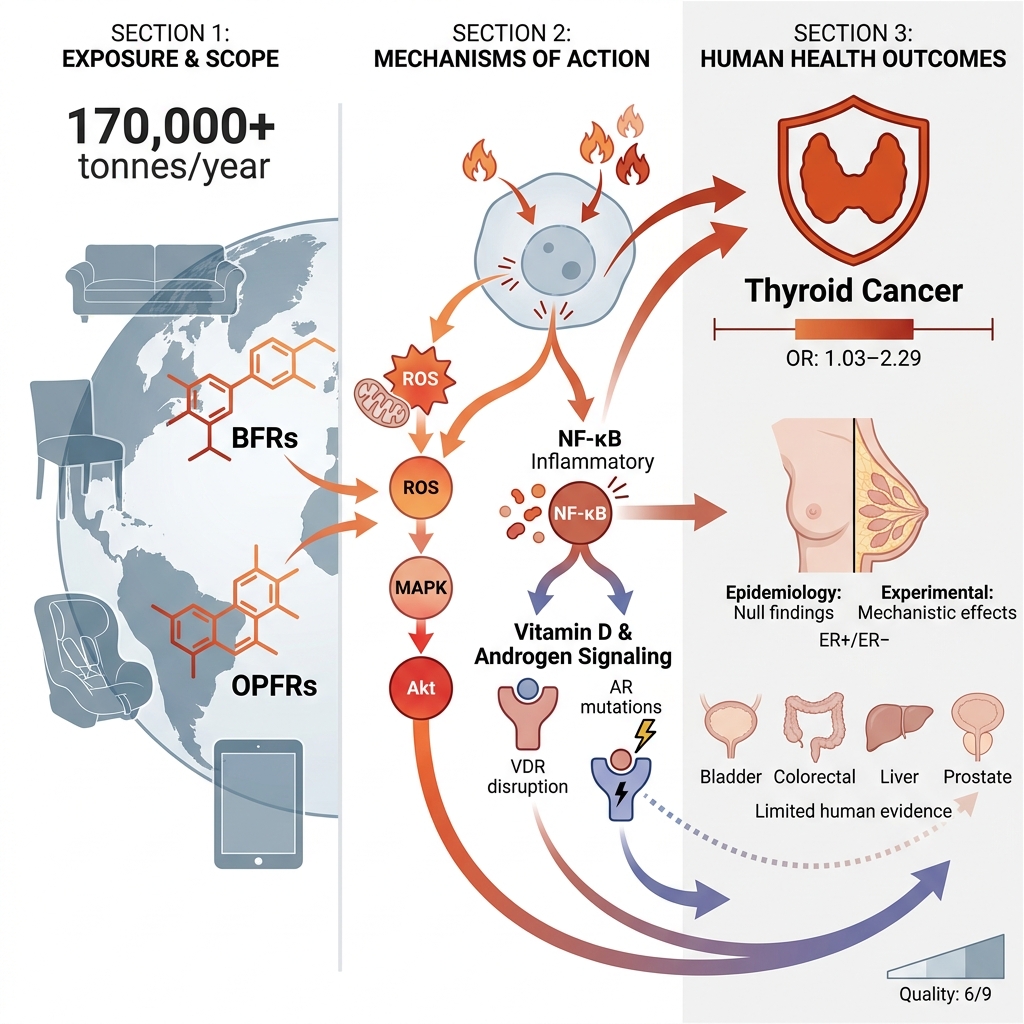
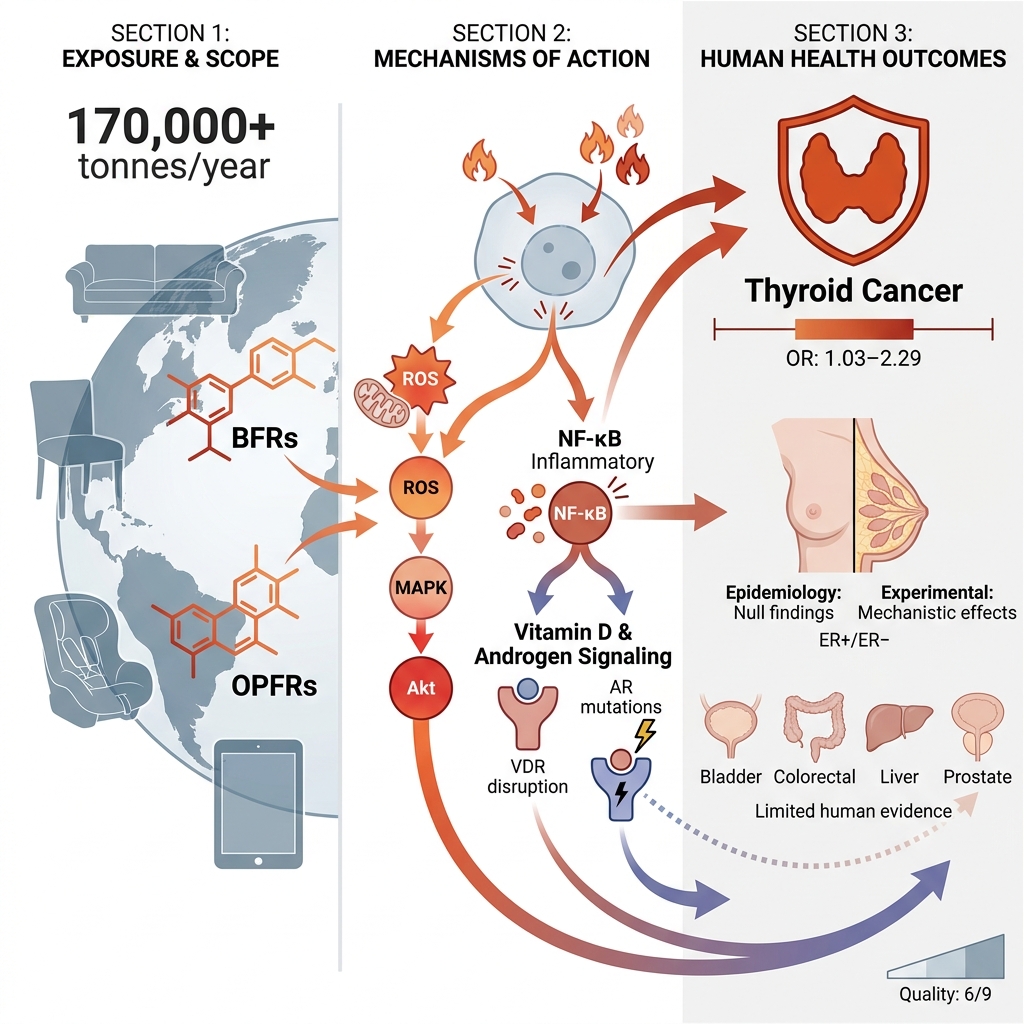
Results: Of 752 records identified, 21 studies satisfied the eligibility criteria, comprising eight human epidemiological investigations and thirteen experimental studies. Among the malignancies examined, thyroid cancer exhibited the most consistent positive association with BFR exposure, with decabromodiphenyl ether (BDE-209) identified as the principal contributor (odds ratio [OR] = 1.03–2.29 for BDE-209), whereas the evidence for breast and other cancers remained inconsistent. Experimental investigations elucidated several biologically plausible mechanisms, including oxidative stress, endocrine disruption, pro-inflammatory nuclear factor kappa B (NF-κB) signaling, and immune modulation.
Conclusion: Collectively, the available evidence indicates that BFR exposure may elevate cancer risk, particularly for thyroid malignancy; nevertheless, the substantial heterogeneity across studies underscores the need for standardized exposure assessment, prospective cohort designs, and further mechanistic validation before definitive causal inferences can be established.
Graphical abstract
Introduction
The etiology of tumorigenesis is inextricably linked to environmental determinants, among which chemical exposures constitute a critical public health challenge. While environmental carcinogens are generally delineated into chemical, physical, and biological agents, chemical entities exert a particularly dominant influence on the landscape of environmental carcinogenesis. Anthropogenic activities, specifically rapid industrialization and agricultural expansion, have led to the progressive contamination of essential survival matrices, including atmospheric and aquatic systems. Within this broad spectrum of environmental pollutants, brominated flame retardants (BFRs) have emerged as a significant class of potential carcinogens due to their extensive utilization across diverse industrial sectors1,2,3.
BFRs encompass a heterogeneous group of chemical compounds incorporated into a vast array of consumer and industrial products, ranging from electronic devices and textiles to furniture and construction materials, to augment their fire-resistant properties4. Among these compounds, tetrabromobisphenol A (TBBPA) currently occupies the preeminent position as the most widely synthesized and utilized brominated flame retardant on a global scale. Notably, China's production capacity alone has reached approximately 180,000 tonnes annually. Consequently, TBBPA has transformed into a ubiquitous environmental contaminant, identified pervasively across both abiotic compartments and biotic systems worldwide. Historical data reflect this escalating trajectory, with global market demand for TBBPA surging from over 120,000 tonnes in 2001 to exceed 170,000 tonnes by 2004, a trend that projections suggest will persist in the foreseeable future5.
Among the various brominated flame retardants, decabromodiphenyl ether (BDE-209) merits particular attention due to its widespread environmental occurrence and potential health implications. BDE-209, representing the fully brominated congener of polybrominated diphenyl ethers (PBDEs), has been extensively utilized as an additive flame retardant in plastics, textiles, and electronic equipment. Of significant toxicological concern is the structural resemblance between BDE-209 and thyroid hormones, particularly thyroxine (T4). This molecular similarity enables BDE-209 to potentially interfere with thyroid hormone homeostasis through multiple mechanisms, including competitive binding to thyroid hormone transport proteins, disruption of thyroid hormone receptor signaling, and interference with enzymes involved in thyroid hormone metabolism. The lipophilic nature and environmental persistence of BDE-209 facilitate its bioaccumulation in adipose tissues and subsequent biomagnification through food chains. Epidemiological investigations have demonstrated associations between household dust BDE-209 concentrations and increased papillary thyroid cancer risk, with odds ratios reaching 2.29 in exposed populations10. Furthermore, emerging evidence suggests that BDE-209 exposure may compromise the efficacy of targeted cancer therapies, raising additional concerns regarding its clinical significance beyond primary carcinogenesis. The combination of structural similarity to thyroid hormones, widespread environmental distribution, and demonstrated associations with thyroid malignancies positions BDE-209 as a flame retardant compound of paramount public health importance.
The comprehensive toxicological profile of TBBPA has been documented to encompass a range of adverse outcomes, including hepatotoxicity14, deleterious effects on the reproductive system15, and neurotoxicity16. The extensive industrial application of these compounds has precipitated their environmental persistence and bioaccumulation, thereby generating significant apprehension regarding potential adverse health sequelae, particularly concerning carcinogenic risks17,18,19. Furthermore, the inherent chemical stability and high lipophilicity characterizing BFRs, including polybrominated diphenyl ethers (PBDEs), facilitate their recalcitrance in environmental matrices and subsequent accumulation within biological tissues, indicative of pervasive exposure among both human populations and wildlife20.
Contemporary research endeavors have increasingly prioritized the investigation of the endocrine-disrupting properties of BFRs and their potential contribution to carcinogenesis21. From a molecular perspective, TBBPA has been elucidated to induce the activation of the NF-κB signaling pathway, subsequently triggering inflammatory cascades within cellular systems22. This signaling pathway, which can be stimulated by diverse factors including bacterial byproducts, physiological stress, and inflammatory cytokines, involves the critical processes of phosphorylation and ubiquitination of IκBα; these events permit the nuclear translocation of NF-κB molecules to initiate downstream gene transcription23. Additionally, oxidative stress, characterized by the generation of reactive oxygen species (ROS), constitutes another pivotal mechanism through which TBBPA may exert its toxicological effects. Empirical studies have substantiated that specific compounds possess the capacity to induce cancer cell apoptosis via the ROS-regulated NF-κB pathway24,25,26.
Considering the ubiquitous nature of BFR exposure and the accumulating evidence suggesting potential carcinogenic effects, a rigorous and comprehensive evaluation of the relationship between BFRs and human malignancy is warranted. Although isolated investigations have examined specific BFR compounds or distinct cancer types, there remains a paucity of recent systematic reviews that holistically synthesize current evidence across the broad spectrum of BFRs and cancer outcomes. Consequently, this systematic review aims to critically evaluate the association between brominated flame retardants and human cancer risk, explore the underlying mechanisms of action, and delineate existing research gaps to inform future scientific investigations and regulatory frameworks.
Methods
Study Design and Protocol
This study was designed as a systematic review and was conducted and reported in accordance with the Preferred Reporting Items for Systematic Reviews and Meta-Analyses (PRISMA) statement to ensure methodological rigor, reproducibility, and transparency. A review protocol defining the objectives, eligibility criteria, search strategy, data-extraction items, and synthesis plan was established a priori, before the literature search commenced, to minimize post hoc decision-making and the risk of selective reporting. Because the included evidence was expected to span both human observational studies and laboratory-based experimental work, the protocol was structured to handle these evidence types as separate but complementary streams rather than forcing them into a single analytic framework.
Search Strategy
A comprehensive systematic search was performed on 31 May 2025 across three electronic databases including PubMed, Scopus, and the EBSCO Discovery Service (the latter encompassing Academic Search Complete, MEDLINE Complete, and other health-science databases). The search was limited to peer-reviewed, English-language articles published between 1 January 2015 and 31 May 2025, a window chosen to capture contemporary evidence while keeping the volume of records feasible to screen.
A single search logic was applied uniformly across all databases and was built from two conceptual blocks combined with the Boolean operator AND: an exposure block for brominated and organophosphate flame retardants, and an outcome block for cancer and neoplastic disease. Within each block, synonyms, abbreviations, and spelling variants were combined with OR, controlled vocabulary (MeSH) was used where available, and truncation (*) was applied to capture word-form variants. The exposure block comprised: “Flame Retardants” (MeSH) OR “brominated flame retardant*” OR BFR* OR PBDE* OR “polybrominated diphenyl ether*” OR TBBPA OR “tetrabromobisphenol A” OR HBCD OR “hexabromocyclododecane” OR OPFR* OR “organophosphate flame retardant*”. The outcome block comprised: “Neoplasms” (MeSH) OR cancer OR neoplasm* OR carcinoma OR tumor* OR tumour* OR malignan*.
This logic was translated into the native syntax of each database, with field tags, controlled vocabulary, and date and language limiters adapted accordingly. The exact strings executed were as follows:
-
PubMed: ("Flame Retardants"[Mesh] OR "brominated flame retardant*"[Title/Abstract] OR BFR*[Title/Abstract] OR PBDE*[Title/Abstract] OR "polybrominated diphenyl ether*"[Title/Abstract] OR TBBPA[Title/Abstract] OR "tetrabromobisphenol A"[Title/Abstract] OR HBCD[Title/Abstract] OR "hexabromocyclododecane"[Title/Abstract] OR OPFR*[Title/Abstract] OR "organophosphate flame retardant*"[Title/Abstract]) AND ("Neoplasms"[Mesh] OR cancer[Title/Abstract] OR neoplasm*[Title/Abstract] OR carcinoma[Title/Abstract] OR tumor*[Title/Abstract] OR tumour*[Title/Abstract] OR malignan*[Title/Abstract]) AND ("2015/01/01"[Date - Publication] : "2025/05/31"[Date - Publication]); Filters: English, Humans
-
Scopus: TITLE-ABS-KEY(("brominated flame retardant*" OR BFR* OR PBDE* OR "polybrominated diphenyl ether*" OR TBBPA OR "tetrabromobisphenol A" OR HBCD OR hexabromocyclododecane OR OPFR* OR "organophosphate flame retardant*") AND (cancer OR neoplasm* OR carcinoma OR tumor* OR tumour* OR malignan*)) AND PUBYEAR > 2014 AND PUBYEAR < 2026 AND (LIMIT-TO(LANGUAGE, "English"))
-
EBSCO Discovery Service: (("brominated flame retardant*" OR BFR* OR PBDE* OR "polybrominated diphenyl ether*" OR TBBPA OR "tetrabromobisphenol A" OR HBCD OR hexabromocyclododecane OR OPFR* OR "organophosphate flame retardant*") AND (cancer OR neoplasm* OR carcinoma OR tumor* OR tumour* OR malignan*)); Limiters: Publication Date 2015-01-01 to 2025-05-31; Language: English
Database-specific limiters were applied so that the three searches were equivalent in scope despite differences in platform syntax. Language was restricted to English in every database, and the 2015–2025 window was enforced using each platform’s native date field (the [Date – Publication] tag in PubMed, the PUBYEAR operator in Scopus, and the publication-date limiter in EBSCO). A species or study-model restriction was handled deliberately and non-uniformly: the “Humans” filter was applied to the PubMed search only, whereas the Scopus and EBSCO Discovery Service searches were not restricted by species or study model, thereby retaining in vivo animal and in vitro experimental studies. This asymmetry does not bias the evidence base, because in vitro investigations conducted in human-derived cancer cell lines are indexed under the “Humans” tag in MEDLINE/PubMed and were therefore retained by the PubMed search; only studies of non-mammalian species and purely ecological investigations were excluded by this filter. The reference lists of all included articles were additionally hand-screened to identify any further eligible studies.
Eligibility Criteria
Study eligibility was defined a priori using the PICOS framework (Population, Intervention/Exposure, Comparison, Outcomes, Study design) and is summarized in Table 1. Eligible populations comprised human epidemiological studies of any age, sex, or geographical setting, in vitro studies using human cancer cell lines, and in vivo animal models of relevance to human cancer. Eligible exposures were quantified exposures to specific BFRs (PBDEs, TBBPA, HBCD), organophosphate flame retardants (OPFRs), or novel brominated flame retardants (NBFRs), including biomarker-based measurements in blood, urine, or tissue. Eligible comparisons were exposed versus unexposed groups, dose–response gradients, or contrasts between BFR compounds. Eligible outcomes were cancer incidence or mortality, quantitative risk estimates (OR, HR, or RR with 95% CI), or carcinogenic mechanisms (e.g., DNA damage, oxidative stress, endocrine disruption, or proliferation and migration markers). Eligible study designs included observational (cohort, case-control, cross-sectional) and experimental (in vitro/in vivo) studies. Reviews, meta-analyses, editorials, case reports or series, conference abstracts without full text, duplicate publications, non-english articles, and records without retrievable full text were excluded. The decision to admit both human and experimental evidence was intentional, allowing epidemiological associations to be interpreted alongside mechanistic plausibility from laboratory studies.
PICOS criteria defining eligibility for study inclusion in the systematic review. Summary of Population, Intervention/Exposure, Comparison, Outcomes, and Study Design criteria applied to screen and select human epidemiological and experimental studies on brominated flame retardants (BFRs), organophosphate flame retardants (OPFRs), and cancer risk.
| PICOS Element | Inclusion Criteria | Exclusion Criteria |
|---|---|---|
| Population | Human epidemiological studies (any age, sex, or geographical location); In vitro studies using human cancer cell lines; In vivo animal models relevant to human cancer | Non-mammalian species; Studies without relevance to human health; Exclusively ecological studies |
| Intervention/Exposure | Quantified exposure to specific BFRs (PBDEs, TBBPA, HBCD, etc.); Organophosphate flame retardants (OPFRs); Novel brominated flame retardants (NBFRs); Biomarker measurements (blood, urine, tissue) | No BFR exposure measurement; Unspecified chemical mixtures; Exposure assessment based solely on proximity or occupation without biomarkers |
| Comparison | Exposed vs. unexposed groups; Different exposure levels (dose-response); Various BFR compounds | No comparison group; Inadequate exposure contrast |
| Outcomes | Cancer incidence or mortality; Cancer risk measures (OR, HR, RR with 95% CI); Carcinogenic mechanisms (DNA damage, oxidative stress, endocrine disruption); Cell proliferation, migration, or metastasis markers | Non-cancer health outcomes only; Biomarkers without cancer relevance; Purely toxicological endpoints without cancer connection |
| Study Design | Cohort studies (prospective/retrospective); Case-control studies; Cross-sectional studies; Experimental studies (in vitro/in vivo) | Reviews, meta-analyses, editorials; Case reports, case series; Conference abstracts without full text; Duplicate publications |
| Other | Published in English; Full text available; Peer-reviewed publications | Non-English publications; Unable to retrieve full text; Gray literature |
Study Selection
Study selection followed a structured three-phase process aligned with PRISMA. All retrieved records were first imported into Rayyan systematic review software (Rayyan Systems Inc., Cambridge, MA, USA) for automated duplicate detection and screening management. In the first phase, two reviewers (XL and AM) independently screened titles against the eligibility criteria. In the second phase, the abstracts of records passing title screening were independently assessed by the same reviewers. In the third phase, full texts of all potentially eligible records were retrieved and independently evaluated against the PICOS criteria, and the reason for each full-text exclusion was documented. Disagreements at any stage were resolved through discussion or, where consensus could not be reached, by adjudication from a third reviewer (AA). The full selection process is depicted in Section 6 (Tables and Figures, Diagram 1).
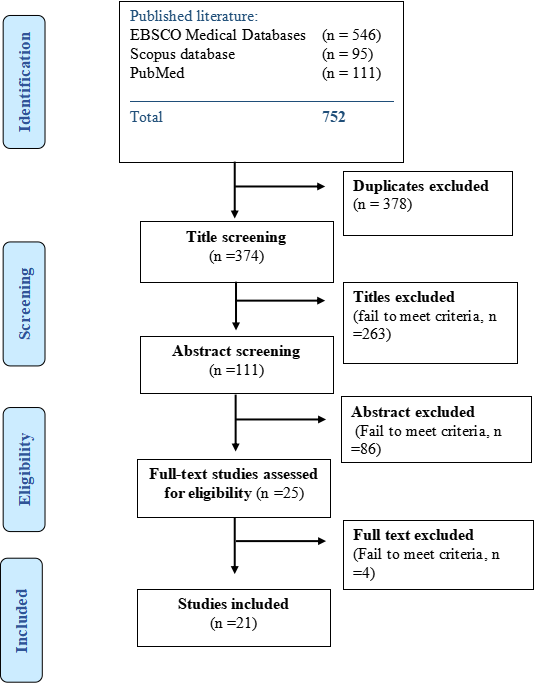
PRISMA flow diagram outlining the systematic literature screening and selection process. The flow diagram details the sequential steps of record identification across electronic databases (EBSCO, Scopus, PubMed; total N = 752), duplicate removal (n = 378), title screening (n = 374; 263 excluded), abstract screening (n = 111; 86 excluded), full-text eligibility assessment (n = 25; 4 excluded), and final study inclusion (N = 21) examining brominated flame retardants (BFRs), organophosphate flame retardants (OPFRs), and human cancer risk. Abbreviations: PRISMA, Preferred Reporting Items for Systematic Reviews and Meta-Analyses.
Data Extraction
Data extraction was performed independently and in duplicate by two reviewers using a standardized extraction form developed in EPPI-Reviewer Web (EPPI-Centre, UCL Social Research Institute, London, UK); independent dual extraction was used to reduce transcription error and minimize the risk of selective data capture. For every included study, the following were extracted: study characteristics (authors, year, country, design, sample size); population characteristics (age, sex, ethnicity, recruitment source); exposure assessment (BFR types, measurement methods, biological matrices, exposure levels); cancer outcomes (type, diagnostic method, incidence/mortality); effect estimates (OR, HR, RR with 95% CI); and the confounders adjusted for in each analysis. For experimental studies, additional fields were captured, namely the cell lines used, experimental conditions, and mechanistic endpoints. Discrepancies between reviewers were reconciled by discussion against the source article.
Data Synthesis
Given the substantial heterogeneity anticipated across study designs, populations, exposure metrics, and outcome definitions, a quantitative meta-analysis was not appropriate, and a narrative synthesis was undertaken instead. Studies were grouped by cancer type and by BFR compound where possible. For human epidemiological studies, effect estimates were tabulated and compared across populations and exposure settings, while experimental studies were synthesized separately to identify recurring biological mechanisms. To preserve methodological coherence, three evidence streams were kept analytically distinct and were never statistically pooled: (i) human epidemiological studies reporting quantitative risk estimates (OR, HR, RR); (ii) in vitro and in vivo experimental studies; and (iii) computational/bioinformatic analyses derived from public repositories (e.g., TCGA and the Comparative Toxicogenomics Database, CTD). Epidemiological effect estimates were never combined with computational outputs; instead, the experimental and in silico streams were used to corroborate the biological plausibility of associations observed in the epidemiological literature, not to derive risk magnitudes.
Results
Study Selection
The systematic search yielded 752 records: 111 from PubMed, 95 from Scopus, and 546 from EBSCO Discovery Service. After removing 378 duplicates using Rayyan, 374 unique articles remained for screening. Title screening excluded 263 articles for the following reasons: no BFR exposure assessment (n=98), non-cancer outcomes (n=87), review articles or editorials (n=45), non-English language (n=18), and conference abstracts without full text (n=15). Abstract screening was performed on 111 articles, with 86 excluded for not meeting inclusion criteria. Full-text assessment was then performed on 25 articles. Of these, 4 were excluded due to: inadequate exposure measurement or no quantitative data (n=2), no cancer-specific outcomes (n=1), and methodological concerns including insufficient confounding control (n=1). The final analysis included 21 studies meeting all eligibility criteria (Diagram 1).
Study Characteristics
The 21 included studies represented diverse geographical regions, with China contributing the most studies (n=7), followed by the United States (n=5), France (n=3), Brazil (n=2), and one study each from Korea, Portugal, Poland, and Sweden. Publication years ranged from 2015 to 2024, with a notable increase in publications after 2020 (n=15). Study designs varied considerably: eight were human epidemiological studies (3 cohort, 4 case-control, 1 cross-sectional), while thirteen employed experimental approaches including in vitro cell culture studies (n=9), animal models (n=2), and computational/database analyses (n=2). Sample sizes in human studies ranged from 141 to 1,304 participants, while experimental studies utilized established cancer cell lines including MCF-7 (breast), A549 (lung), HepG2 (liver), and TPC-1 (thyroid).
Types of Cancer Studied
Table 2 summarizes the cancer types investigated across all included studies. Breast cancer was the most frequently studied (n=6 studies), followed by thyroid cancer (n=5), bladder cancer (n=2), prostate cancer (n=2), with single studies examining colorectal, endometrial, gastric, liver, lung, and melanoma cancers. The biological samples analyzed varied by study design: human studies primarily used serum/plasma (n=6) or whole blood (n=2), while experimental studies employed established cancer cell lines or computational databases.
Summary of study characteristics and cancer types investigated across the included literature. Characteristics of the 21 included studies, detailing country of origin, target malignancy, sample size, and biological matrices or cell lines evaluated.
| Author | Country | Type of Cancer | Sample Size | Biological Samples |
|---|---|---|---|---|
| Mancini et al. (2020) | France | Breast cancer | 197 cases, 197 controls | Human blood |
| Lee et al. (2019) | Korea | Breast cancer | In vitro | MCF-7 cell line |
| Denic-Roberts et al. (2024) | USA | Thyroid cancer | 652 cases, 652 controls | Serum |
| Su et al. (2020) | USA | Endometrial cancer | In vitro | Ishikawa cells |
| Yu et al. (2022) | China | Bladder cancer | In silico | CTD database |
| Perrot-Applanat et al. (2021) | France | Diffuse-gastric cancer | 8 cases, 24 controls | Great omentum |
| Juarez et al. (2024) | Brazil | Mammary cancer | Animal study | Animal (pups) |
| Liu et al. (2022) | China | Thyroid cancer | 239 cases, 242 controls | Serum |
| Frenoy et al. (2022) | France | Breast cancer | 194 cases, 194 controls | Blood and questionnaire |
| Sousa et al. (2022) | Portugal | Breast cancer | In vitro | MCF-7 cells |
| Zhang, Xiaolei et al. (2023) | China | Bladder cancer | In silico | Gene set variation analysis |
| Wang, Xinpei et al. (2024) | China | Thyroid carcinoma | In vitro | Nthy-ori 3-1, TPC-1, K1 cells |
| Zhang, Xu et al. (2021) | China | Prostate cancer | In silico | TCGA and CTD databases |
| Hong, Zhongshi et al. (2022) | China | Colorectal cancer | In silico | TCGA and CTD databases |
| Szychowski et al. (2023) | Poland | Lung adenocarcinoma | In vitro | Human A549 cells |
| Yu, Yunjiang et al. (2022) | China | Liver cancer | In vitro | Human HepG2 cells |
| Steil et al. (2022) | Brazil | Melanoma | In vitro | Murine melanoma B16-F1 |
| Terrell et al. (2016) | USA | Breast cancer | 51 cases, 202 controls | Human serum sample |
| Kharlyngdoh et al. (2016) | Sweden | Prostate cancer | In vitro | HeLa, T-47D, LNCaP cell lines |
| Aschebrook-Kilfoy et al. (2015) | USA | Thyroid cancer | 208 cases, 104 controls | Serum |
| Hoffman et al. (2017) | USA | Thyroid cancer | 71 cases, 70 controls | Serum |
BFR Compounds and Associations with Cancer
Table 3 presents the specific BFR compounds investigated and their reported associations with cancer outcomes. The compounds studied included traditional BFRs (PBDEs, PBB-153), current-use BFRs (TBBPA and derivatives), novel brominated flame retardants (NBFRs), and organophosphate flame retardants (OPFRs). Consistent with the PICOS exposure criterion, a small number of eligible studies assessed BFRs as components of broader endocrine-disrupting chemical (EDC) or persistent organic pollutant (POP) mixtures rather than in isolation. Specifically, Denic-Roberts et al.29 evaluated an 18-compound EDC mixture that included BFRs alongside polychlorinated biphenyls (PCBs) and organochlorine pesticides; Frenoy et al.32 co-assessed BFRs with per- and polyfluorinated alkyl substances (PFAS); and Perrot-Applanat et al.31 measured PBDEs, PBB, and HBCD together with PCDD/Fs and PCBs. These studies were retained because they reported BFR-inclusive exposures meeting our eligibility criteria; for each, only the BFR-relevant exposures and associations were extracted and synthesized, and the non-flame-retardant co-pollutants (PFAS, pure PCBs, and dioxins) were not treated as review outcomes.
Overview of specific flame retardant compounds, key findings, and journal impact factors. Summary of the flame retardant chemical classes (BFRs, NBFRs, OPFRs), exposure metrics, biological endpoints, key carcinogenic associations or mechanistic observations, and source journal impact factors (IF) from the 21 selected studies.
| Study | Types of BFR | Finding | IF |
|---|---|---|---|
| Mancini et al. (2020) | BDE congeners (BDE-28, BDE-47, BDE-99, BDE-100, BDE-153, BDE-154) and PBB-153 | No association between plasma levels of PBDEs and PBB-153 and postmenopausal breast cancer risk (ORs: 0.87–1.07) | 5.3 |
| Lee et al. (2019) | TBBPA | TBBPA can induce cancer cell metastasis by releasing MMP-9 via ROS-dependent MAPK and Akt pathways in MCF-7 cells | 1.6 |
| Denic-Roberts et al. (2024) | Mixture of 18 EDCs including PCBs, BFRs, and organochlorine pesticides | Exposure to EDC mixture may be associated with increased classical PTC risk | 8.3 |
| Su et al. (2020) | TBBPA-BDBPE and TBBPA-BHEE | Low doses of TBBPA derivatives affect endometrial cancer cell behavior | 12.2 |
| Yu et al. (2022) | Various OPFRs including TPP, TCEP, TDCIPP | OPFRs promote bladder cancer progression via immune gene expression | 4.2 |
| Perrot-Applanat et al. (2021) | PCDDs/Fs, PCBs, PBDEs, PBB, HBCD | POPs found in omentum from patients with aggressive diffuse-GC | 4.5 |
| Juarez et al. (2024) | PBDE mixtures (DE-71, DE-79, BDE-209) | Maternal BFR exposure associated with mammary cancer in offspring | 3.9 |
| Liu et al. (2022) | NBFRs and OPEs | High-risk association between NBFRs/OPEs exposure and thyroid cancer | 11.3 |
| Frenoy et al. (2022) | BFRs (PBDEs) co-assessed within a mixture with PFAS (PBFS, PFDS, PFBA, PFPA) | Mixed effects on breast cancer risk by ER status | 5.3 |
| Sousa et al. (2022) | HBCD, TBB, HBB, PBT | BFRs altered MCF-7 proliferation and vitamin D signaling | 5.01 |
| Zhang, Xiaolei et al. (2023) | TPP | TPP-centered risk model predicts bladder cancer | 3.5 |
| Wang, Xinpei et al. (2024) | BDE-209 | BDE-209 reduces dabrafenib sensitivity in PTC | 4.8 |
| Zhang, Xu et al. (2021) | TPP | OPFRs associated with multiple tumor types | 6.2 |
| Hong, Zhongshi et al. (2022) | OPFRs | OPFRs closely associated with CRC, TPP increases cell proliferation | 6.2 |
| Szychowski et al. (2023) | TBC | TBC induced toxicity only at high concentrations (10–100 μM) | 2.7 |
| Yu et al. (2022) | TBBPS and TCBPA | TBBPS/TCBPA more likely to disrupt liver metabolic homeostasis | 8.2 |
| Steil et al. (2022) | BDE-47, BDE-99 | PBDEs affect melanoma cell metastatic potential | 5.8 |
| Terrell et al. (2016) | PBBs | Suggestive but non-significant increased breast cancer risk | 3.1 |
| Kharlyngdoh et al. (2016) | TBECH | AR mutations increase transcriptional activation with TBECH | 3.4 |
| Aschebrook-Kilfoy et al. (2015) | PBDEs | No association between serum BDEs and thyroid cancer risk | 4.8 |
| Hoffman et al. (2017) | BDE-209, TCEP, various PFRs | BDE-209 associated with increased PTC odds (OR = 2.29) | 9.7 |
Human Epidemiological Evidence
Breast cancer studies yielded predominantly null findings in epidemiological investigations. Mancini et al.27 reported no significant associations between plasma PBDE or PBB-153 levels and postmenopausal breast cancer risk, with odds ratios ranging from 0.87 to 1.07, all non-significant. This investigation enrolled 197 cases and 197 matched controls, providing adequate statistical power to detect moderate effect sizes. Terrell et al.41 found suggestive but non-significant increased breast cancer risk with higher PBB exposure in their study of 51 cases and 202 controls from Michigan. Frenoy et al.32 employed Bayesian kernel machine regression models and identified differential effects by estrogen receptor status, suggesting negative cumulative effects of BFRs and PFAS on ER-negative breast cancer risk while showing positive cumulative effects on ER-positive breast cancer risk, indicating potential heterogeneity in BFR effects based on tumor molecular subtypes.
Experimental and Mechanistic Evidence
The thirteen experimental studies provided crucial insights into potential mechanisms linking BFR exposure to cancer development and progression. These studies revealed multiple pathways through which BFRs may influence carcinogenesis. Lee et al.28 suggested that TBBPA might promote breast cancer cell metastatic potential through ROS-dependent MAPK and Akt pathway activation in MCF-7 cells in vitro, providing mechanistic insights into how this flame retardant could potentially enhance metastatic capacity at the cellular level. Similarly, Sousa et al.33 reported that various BFRs including HBCD, TBB, HBB, and PBT altered MCF-7 cell proliferation and migration while disrupting vitamin D signaling pathways, suggesting interference with protective cellular mechanisms.
Quality Assessment
The Newcastle-Ottawa Scale assessment of the eight human epidemiological studies revealed moderate overall quality with a median score of 6 (IQR: 5–7). Studies generally perform well in selection criteria, with seven of eight studies scoring at least 3 stars for appropriate case and control selection. Outcome assessment was adequate in six of eight studies, achieving maximum scores for this domain. However, significant limitations were identified in the comparability domain, where only three studies achieved full marks for controlling important confounders including age, sex, socioeconomic status, and co-exposures. Exposure assessment represented another area of concern, with five studies relying on single time-point measurements that may not adequately capture long-term exposure patterns relevant to cancer development. Nevertheless, for compounds with extended biological half-lives such as PBDEs, single time-point measurements may reasonably approximate chronic exposure levels, partially mitigating this methodological constraint. The cohort studies generally achieved higher quality scores (median 7) compared to case-control studies (median 6), primarily due to better exposure assessment protocols and more comprehensive follow-up procedures.
Synthesis of Evidence Strength
The synthesis of evidence revealed varying strengths of association across cancer types and study designs. Thyroid cancer emerged with the strongest suggestive evidence, showing consistent positive associations across multiple studies despite variation in effect sizes (OR range: 1.03–2.29). Specifically, BDE-209 demonstrated the most robust associations with thyroid malignancies, with the Hoffman et al. study10 reporting the highest point estimate (OR=2.29) and the Denic-Roberts et al. investigation29 providing the largest sample size supporting mixture effects. This consistency across different populations and exposure assessment methods strengthens the plausibility of a true association. Breast cancer presented mixed evidence, with epidemiological studies predominantly reporting null findings while experimental models demonstrated clear mechanistic effects on cancer cell behavior. This discrepancy highlights the complexity of translating in vitro findings to population-level cancer risk. For prostate, bladder, and other cancer types, the evidence base remained limited, with most data derived from experimental or computational approaches rather than human epidemiological studies. The heterogeneity in findings across studies reflects multiple sources of variation including differences in exposure assessment methodologies, population characteristics, specific BFR compounds examined, and varying levels of confounding control.
Discussion
Prior to synthesizing the evidence from individual studies, it is essential to acknowledge the substantial chemical heterogeneity within the broad category of flame retardants examined in this systematic review. Flame retardants encompass a diverse array of chemical compounds with distinct physicochemical properties, metabolic profiles, and toxicological characteristics. Regulatory and scientific bodies have increasingly recognized that treating all organohalogen flame retardants as a single homogeneous class may be inappropriate for hazard assessment and risk characterization. The National Academies of Sciences, Engineering, and Medicine (NASEM) has recommended that organohalogen flame retardants be subdivided into approximately 14 distinct subclasses based on chemical structure, physicochemical properties, and predicted biological activity. This classification framework acknowledges that compounds within the same subclass may share similar toxicological profiles and mechanisms of action, while compounds across different subclasses may exhibit markedly different health effects.
The temporal evolution of flame retardant usage patterns represents another critical consideration for interpreting epidemiological findings. Polybrominated diphenyl ethers (PBDEs), including the commercially important penta-BDE and octa-BDE mixtures, dominated the flame retardant market for several decades before regulatory restrictions led to their phase-out in many jurisdictions beginning around 2003–2004. The withdrawal of PBDEs from commerce precipitated a transition toward organophosphate flame retardants (OPFRs) as replacement compounds. This market shift has profound implications for exposure assessment in epidemiological studies, as cohorts exposed during different calendar periods may have experienced substantially different exposure profiles4,7.
Furthermore, the toxicokinetic properties of different flame retardant classes influence their utility as biomarkers of exposure. PBDEs, characterized by high lipophilicity and metabolic stability, exhibit prolonged biological half-lives ranging from months to years in human tissues. Consequently, single serum or plasma measurements may reasonably approximate cumulative long-term exposure for these compounds. In contrast, OPFRs generally undergo more rapid metabolism and excretion, resulting in shorter biological half-lives. For these compounds, single time-point biomarker measurements may capture only recent exposure and may inadequately reflect chronic exposure patterns relevant to cancer development. The differential consideration of halogenated versus non-halogenated OPFRs is also warranted, as halogenated compounds may exhibit distinct toxicological profiles and have demonstrated associations with thyroid effects in both animal and human studies17. These chemical and temporal considerations provide essential context for interpreting the heterogeneous findings across studies included in this systematic review.
This systematic review comprehensively synthesized data derived from 21 distinct investigations to evaluate the association between BFR exposure and cancer risk, unveiling a multifaceted and intricate landscape of potential relationships that vary substantially according to the specific BFR congener, cancer typology, and methodological design employed. The aggregated evidence intimates potential carcinogenic linkages between BFR exposure and several malignancies, with thyroid cancer exhibiting the most consistent positive signal across multiple independent cohorts. Nevertheless, the substantial heterogeneity observed across findings underscores the profound challenges inherent in establishing definitive causal inferences between environmental chemical exposures and complex oncological outcomes.
The most robust evidentiary signal emerged within the context of thyroid malignancy, where multiple independent investigations reported positive associations with BFR exposure, with BDE-209 identified as a particularly significant contributor. The reported odds ratios, ranging from 1.03 to 2.29, indicate a modest yet clinically significant elevation in risk that necessitates rigorous scrutiny from both public health and regulatory standpoints. The consistency of these findings across diverse populations and study designs reinforces the biological plausibility of this association. Mechanistically, the structural homology between certain BFRs and thyroid hormones provides a compelling basis for this relationship, as these compounds possess the capacity to interfere with thyroid hormone synthesis, transport, or metabolic clearance, thereby potentially precipitating cellular dysfunction and malignant transformation.
The experimental studies included in this review provide crucial mechanistic insights that support the biological plausibility of BFR-cancer associations. Multiple interconnected pathways appear to mediate these effects. The investigation by Lee et al.28 suggested that TBBPA might promote cancer cell metastatic behavior through ROS-dependent MAPK and Akt pathways in MCF-7 cells in vitro, providing a potential mechanistic link between BFR exposure and enhanced cancer aggressiveness at the cellular level. It should be noted that these findings were derived from in vitro experiments and require validation through in vivo studies to confirm their relevance to human carcinogenesis. The findings reported by Lee et al.28 provide critical mechanistic insights, suggesting that TBBPA may potentiate the metastatic potential of cancer cells through the activation of ROS-dependent MAPK and Akt signaling cascades. These pathways are integral to cellular proliferation, survival, and metastatic capability, and their dysregulation constitutes a fundamental hallmark of tumorigenesis. Furthermore, the induction of oxidative stress pathways by BFRs can precipitate DNA damage, epigenetic dysregulation, and the disruption of canonical cellular signaling, all of which collectively contribute to the carcinogenic process.
Endocrine disruption represents another pivotal mechanism through which BFRs may modulate cancer risk. The research by Kharlyngdoh et al.42, which elucidated the effects of TBECH on androgen receptor mutations linked to prostate cancer, exemplifies the capacity of BFRs to interfere with hormonal signaling essential for cellular homeostasis. Given the hormone-dependent nature of many malignancies, particularly those affecting reproductive tissues, these endocrine-disrupting activities offer a biologically plausible pathway for tumor promotion. Moreover, the perturbation of vitamin D signaling pathways, as reported by Sousa et al.33, introduces an additional layer of endocrine interference, considering the critical role of vitamin D in regulating cellular differentiation, proliferation, and apoptosis.
Sources of Heterogeneity
The substantial heterogeneity observed across the included investigations reflects a complex interplay of methodological and biological variations that necessitates cautious interpretation of the synthesized findings. A primary source of divergence lies in the exposure assessment methodologies, which varied considerably from direct internal dose measurements (e.g., serum, plasma, breast milk) to indirect external exposure estimates (e.g., household dust sampling). Each approach carries inherent constraints in capturing relevant exposure patterns; while dust sampling reflects the indoor microenvironment, it may not fully account for dietary intake or individual metabolic differences. Furthermore, the utilization of different biological matrices presents challenges for cross-study comparability, particularly given that lipid-adjusted concentrations in adipose tissue or breast milk may not be directly comparable to wet-weight concentrations in blood without standardized conversion protocols. The temporal dimension of exposure assessment also contributes to heterogeneity. The extended biological half-lives of lipophilic BFRs (such as PBDEs) in human tissues intimate that single measurements may reasonably reflect long-term or cumulative exposure. However, for rapidly metabolized compounds like TBBPA and certain OPFRs, single time-point sampling may result in exposure misclassification, as it captures only recent intake rather than the chronic exposure relevant to carcinogenesis.
Geographical and demographic variations constitute another significant layer of heterogeneity, likely reflecting global disparities in industrial BFR usage patterns, regulatory phase-out timelines, and lifestyle characteristics. Notably, our review highlighted distinct exposure profiles across regions; for instance, the elevated TBBPA concentrations reported in French populations13 appear markedly higher than those documented in Chinese populations11,12. Such disparities may result from fundamental differences in exposure sources (e.g., electronic waste recycling activities vs. consumer product usage), dietary habits, or even ethnic differences in the metabolic handling of these compounds. These geographical disparities underscore the critical importance of conducting investigations across diverse populations to comprehend the full spectrum of BFR health effects globally. Additionally, the role of host susceptibility factors remains an understudied source of variation; genetic polymorphisms in xenobiotic metabolism enzymes (e.g., cytochrome P450 family) could theoretically influence individual susceptibility to BFR-induced toxicity and cancer risk, an area of gene-environment interaction that remains largely unexplored in the current literature.
While this systematic review provides a comprehensive synthesis of available evidence, the interpretation of our findings requires careful consideration of several inherent methodological limitations. First, the moderate quality scores observed in our NOS assessment (median score of 6) illuminate constraints in the current evidence base that may affect the strength of causal inferences. A primary concern is the potential for residual confounding; although many studies adjusted for basic demographic factors, the inconsistent control for critical confounders such as socioeconomic status, dietary patterns, and specific co-exposures to other environmental toxicants (e.g., heavy metals or pesticides) remains a significant challenge. Future investigations must employ more rigorous analytical approaches, such as propensity score matching or instrumental variable analysis, to better isolate the specific effects of BFRs from the broader exposome. A related constraint is that a subset of eligible studies evaluated BFRs within multi-class chemical mixtures (e.g., alongside PFAS, PCBs, or dioxins) rather than in isolation; while only BFR-relevant exposures were extracted, this co-exposure structure limits the extent to which the observed associations can be attributed specifically to brominated compounds.
Furthermore, the preponderance of case-control and cross-sectional designs in the existing literature represents a structural limitation. These retrospective designs are inherently susceptible to recall bias and, more critically, reverse causation, particularly when biomarker levels are measured after cancer diagnosis. The current paucity of prospective cohort studies with extended follow-up periods restricts our ability to firmly establish the temporal sequence between BFR exposure and carcinogenesis. Given that environmental carcinogenesis typically involves prolonged latency periods, future research efforts must prioritize longitudinal designs that can capture exposure windows decades prior to disease onset. Additionally, the mechanistic focus on inflammatory pathways, particularly NF-κB signaling, warrants further validation in human tissue samples to confirm the translational relevance of in vitro findings44,45.
Research Priorities
Future research must prioritize longitudinal, prospective cohort investigations with repeated biomarker measurements to capture critical windows of susceptibility. Unlike single time-point assessments, longitudinal monitoring would enable the characterization of exposure trajectories over the life course, capturing critical windows of susceptibility such as in utero development, childhood, and puberty. These developmental periods may represent times of heightened vulnerability where BFR exposure could structurally alter disease risk trajectories.
Moreover, there is a critical need to integrate "omics" technologies into traditional epidemiological frameworks. The application of molecular epidemiology approaches, specifically transcriptomics, epigenomics, and metabolomics, could elucidate the precise biological perturbations preceding overt cancer development. Such multi-omics data could help identify novel biomarkers of effect, clarifying the intermediate steps between BFR exposure and tumorigenesis. Additionally, the potential interaction between BFR exposure and cancer therapeutics, as suggested by the reduced dabrafenib sensitivity observed in thyroid cancer models35, demands immediate clinical attention. Pharmacoepidemiological studies are needed to determine whether background BFR burden influences treatment efficacy, toxicity profiles, or survival outcomes in cancer patients, which could have direct implications for precision oncology.
The findings of this systematic review extend beyond academic discourse, carrying substantial implications for public health policy and regulatory frameworks. Although definitive causality has not been uniformly established across all cancer types, the weight of evidence, combining consistent epidemiological signals in thyroid cancer with plausible biological mechanisms, supports the adoption of a precautionary principle. The demonstrated persistence, bioaccumulation potential, and widespread environmental distribution of these compounds justify proactive measures to reduce human exposure, rather than waiting for unequivocal causal proof.
Critically, regulatory strategies must evolve from a compound-by-compound assessment to a class-based or subclass-based approach. The historical pattern of "regrettable substitution," where banned BFRs are replaced by structurally similar alternatives with uncharacterized toxicity, highlights the limitations of the current regulatory paradigm. A more holistic framework that considers the shared physicochemical and toxicological properties of organohalogen flame retardants would better protect public health. Furthermore, biomonitoring programs should be expanded and integrated into routine health surveillance systems. Enhanced monitoring of vulnerable populations, particularly pregnant women and occupationally exposed workers, is essential to identify high-risk groups and evaluate the effectiveness of regulatory interventions. These public health actions should proceed in parallel with continued scientific investigation to refine our understanding of risk.
Conclusion
This systematic review synthesizes findings from 21 studies, indicating a concerning link between BFR exposure and cancer risk, particularly thyroid malignancy. BDE-209 identified as the congener with the most robust epidemiological associations. Mechanistic data support BFR-induced carcinogenesis through oxidative stress, endocrine disruption, and inflammatory signaling. However, substantial methodological heterogeneity and the reliance on retrospective designs necessitate cautious interpretation. Well-designed prospective cohorts and molecular epidemiology are required to establish definitive causality. Given the environmental persistence and bioaccumulation potential of BFRs, the application of the precautionary principle through proactive regulatory intervention is justified to protect public health.
Declarations
Abbreviations
BFRs: Brominated flame retardants; OPFRs / OPEs: Organophosphate flame retardants / Organophosphate esters; PBDEs: Polybrominated diphenyl ethers; BDE-209: Decabromodiphenyl ether; TBBPA: Tetrabromobisphenol A; HBCD: Hexabromocyclododecane; NBFRs: Novel brominated flame retardants; PBB: Polybrominated biphenyl; PRISMA: Preferred Reporting Items for Systematic Reviews and Meta-Analyses; ROS: Reactive oxygen species; NF-κB: Nuclear factor kappa B; MAPK: Mitogen-activated protein kinase; MMP-9: Matrix metalloproteinase-9; OR / HR / RR: Odds ratio / Hazard ratio / Relative risk; CI: Confidence interval; PICOS: Population, Intervention/Exposure, Comparison, Outcomes, Study design; EDC: Endocrine-disrupting chemical; POP: Persistent organic pollutant; PFAS: Per- and polyfluoroalkyl substances; PTC: Papillary thyroid cancer / Papillary thyroid carcinoma; CRC: Colorectal cancer; GC: Gastric cancer; NOS: Newcastle-Ottawa Scale; CTD: Comparative Toxicogenomics Database; TCGA: The Cancer Genome Atlas; NASEM: National Academies of Sciences, Engineering, and Medicine; NOS: Newcastle-Ottawa Scale
Acknowledgments
We express sincere gratitude to the Sultan Abdul Samad Library of Universiti Putra Malaysia for providing comprehensive access to electronic databases and digital resources essential for this systematic review.
Author’s contributions
Xiaoqian Lin: Conceptualization, Methodology, Investigation, Data Curation, Writing – Original Draft. AbdulRahman Muthanna: Methodology, Validation, Formal Analysis, Writing – Review & Editing. Habibah Abdul Hamid: Supervision, Project Administration, Resources. Yousif Saleh Ibrahim: Software, Data Visualization, Validation. Fatima Hussein Mohammed Taha AlFutin: Investigation, Data Collection, Writing – Review & Editing. Abdah Md Akim: Conceptualization, Funding Acquisition, Supervision, Writing – Review & Editing. Zhihai Jin: Conceptualization, Methodology, Supervision, Writing – Review & Editing.
Funding
None.
Availability of data and materials
The data supporting the findings of this systematic review are available from the corresponding author upon reasonable request.
Ethics approval and consent to participate
Not applicable.
Consent for publication
Not applicable.
Declaration of generative AI and AI-assisted technologies in the writing process
The authors confirm that no generative artificial intelligence (AI) tools were used in the writing or preparation of this manuscript. All analyses, data interpretations, and manuscript drafting were conducted solely by the authors.
Competing interests
The authors declare that they have no competing interests.